
WISC Biotech Blog & Insights
Reducing sugar in beverages is no longer a niche request from health-conscious shoppers. Global buyers now examine nutrition panels, ingredient lists, taste, cost, and consumer acceptance together. A 500-milliliter bottle may look attractive on a shelf, yet its sugar load can quickly exceed a shopper’s daily expectations. This is where Beverage Sugar Reduction Solutions become commercially important.
Dr. Barry Popkin, a leading public health and nutrition researcher, has stated, “Sugar-sweetened beverages are the single largest source of added sugars in the American diet.” His observation remains highly relevant for manufacturers, importers, and private-label buyers. It connects product development with measurable public health concerns. However, sugar reduction is not simply a matter of removing syrup. Texture may become thin, acidity may feel sharper, and familiar flavors can disappear after the first sip.
The following ten tips examine practical choices for global purchasing teams. They cover sweetness mapping, Brix measurement, gradual reduction, botanical sweeteners, flavor compensation, and pilot-batch testing. Each decision needs evidence from sensory trials and reliable supplier documentation. A lower sugar number is not a complete victory. Consumers may reject a beverage that tastes unfinished. That risk deserves attention.
Regional preferences also matter. A lightly sweetened tea may succeed in one market but seem weak in another. Buyers should compare serving sizes, packaging claims, stability data, and production consistency before approving a formula. Some assumptions will fail. That is normal. Careful testing turns those failures into useful commercial learning.
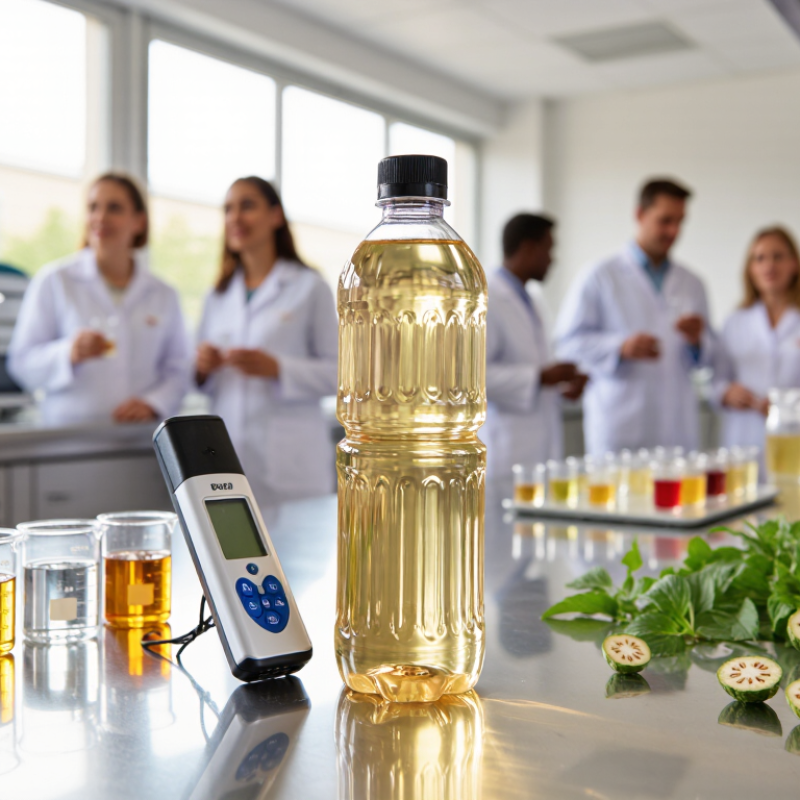
Define Beverage Sugar Reduction Goals for Global Markets
Global buyers should define beverage sugar reduction goals by market, category, and serving size. A single worldwide target sounds efficient, but it can mislead. Consumer expectations and local nutrition rules differ sharply.
The World Health Organization’s Guideline on Sugars Intake recommends keeping free sugars below 10% of daily energy intake. It also suggests a 5% level, equal to about 25 grams daily, for additional health benefits. Buyers can translate this guidance into measurable specifications, such as reducing sugar by 15% within one year or limiting each serving to 5 grams. Use the finished serving, not only the concentrate. Small details matter.
Start with a market baseline. Review current sugar content, package size, purchase occasions, and competing products. Then set separate targets for children’s drinks, hydration beverages, and flavored dairy products. The World Bank’s 2020 report on sugar-sweetened beverage taxes found that higher prices generally reduce purchases, strengthening the commercial case for lower-sugar formulas. Still, reformulation can damage taste. That risk is real.
Procurement teams should request laboratory results, ingredient specifications, and stability data from suppliers. Sensory testing should include local consumers, not only internal panels. A 10% reduction may pass unnoticed in one market but fail in another. Recheck targets every six months using sales, complaints, and repeat-purchase data. Our first target may be imperfect. That is useful. It creates evidence for the next decision.
| No. | Sugar Reduction Tip | Global Market Goal | Recommended Action for Buyers | Relevant Measurement | Practical Reference Point | Market Considerations |
|---|---|---|---|---|---|---|
| 1 | Set a measurable baseline before reformulation | Define the current sugar level, serving size, and product category before approving a reduction target. | Request laboratory results and a standardized specification stating total sugars, added sugars where applicable, carbohydrates, serving size, and energy per serving. | Grams of sugar per 100 mL; grams per serving; kilocalories per serving. | Use a verified product baseline | All marketsAll beverage types |
| 2 | Use the WHO free-sugar recommendation as a strategic ceiling | Keep free sugars below 10% of total daily energy intake, with additional benefits below 5%. | Translate the dietary recommendation into a beverage-specific target while considering the consumer’s total daily diet. | Free sugar grams per serving and percentage of a 2,000 kcal reference diet. | <10% of energy; ideally <5% | WHO defines free sugars as added sugars plus sugars naturally present in honey, syrups, fruit juices, and fruit juice concentrates. |
| 3 | Separate total sugar, added sugar, and free sugar | Avoid inconsistent claims and ensure the formulation meets the terminology used in each destination market. | Ask suppliers to provide an ingredient-level sugar calculation and identify sugars from concentrates, syrups, purees, and added sweeteners. | Added sugar, free sugar, and total sugar in grams per 100 mL and per serving. | Use category-specific definitions | Definitions and declaration rules differ among jurisdictions; regulatory review is required before packaging approval. |
| 4 | Develop a tiered sugar target by market | Create a core global formulation plus local versions where taste preferences, taxes, or labeling rules require adaptation. | Set three internal levels: preferred target, acceptable launch limit, and reformulation trigger. | Maximum sugar threshold by country, channel, and beverage category. | Core formula + local adjustment | Taxes, front-of-pack labels, school standards, and consumer preferences may vary significantly between markets. |
| 5 | Screen for sugar-tax and levy thresholds early | Prevent avoidable cost increases and reduce the risk of a product being placed in a higher levy band. | Prepare a country-by-country compliance matrix covering sugar thresholds, taxable ingredients, exemptions, packaging size, and reporting obligations. | Grams of sugar per 100 mL compared with the applicable national threshold. | Confirm current local law | Fiscal thresholds and rates can change; buyers should verify the latest rules with local counsel or authorities. |
| 6 | Use gradual reduction and sensory validation | Lower sugar without creating unacceptable losses in sweetness, mouthfeel, aroma balance, or repeat purchase intent. | Test staged reductions with trained sensory panels and target-market consumers before selecting the commercial formula. | Just-noticeable difference, liking score, purchase intent, and repeat-use intent. | Validate each reduction step | Sweetness perception varies with acidity, temperature, carbonation, flavor intensity, and consumer habits. |
| 7 | Evaluate sweetener systems by function, not sweetness alone | Maintain product quality while reducing sugar and avoiding unwanted aftertaste or texture changes. | Assess high-intensity sweeteners, bulk sweeteners, fibers, acids, flavors, and processing conditions as an integrated system. | Sweetness profile, aftertaste, viscosity, osmolality, stability, and consumer acceptance. | Check local authorization | Permitted additives, use levels, naming conventions, and warning requirements vary by destination market. |
| 8 | Control portion size and serving communication | Reduce the sugar consumed per occasion while preserving transparent and compliant labeling. | Review container size, serving definition, closure format, and on-pack nutrition information together with the formula. | Sugar per container, sugar per labeled serving, and percentage daily value where required. | Measure both per 100 mL and per serving | Some systems emphasize per 100 mL, while others require or prominently display information per serving. |
| 9 | Design claims around verified nutrition data | Use sugar-reduction claims only when the product meets the applicable legal conditions and the comparison is clear. | Substantiate claims with validated analysis, an identified comparison product or reference, and approved translations for each market. | Analytical sugar result, percentage reduction, claim threshold, and comparator documentation. | Claims require substantiation | Terms such as “reduced sugar,” “low sugar,” and “no added sugar” have different legal conditions in different jurisdictions. |
| 10 | Build continuous monitoring into the supply agreement | Ensure that sugar performance remains consistent after scale-up, ingredient changes, and shipment to different climates. | Specify testing frequency, acceptable tolerance, change-control procedures, certificate requirements, and corrective actions. | Batch-to-batch sugar variation, shelf-life result, complaint rate, and reformulation trigger status. | Monitor every production lot or defined sampling plan | Heat, storage time, ingredient variability, and process changes can affect flavor balance and consumer acceptance. |
FAQS
Reduce sugar by 10–15% in each prototype. Sudden cuts can weaken sweetness, texture, aroma, and aftertaste. Small steps reveal problems earlier.
Check acidity, aroma, mouthfeel, color, viscosity, and aftertaste. A drink may taste less sweet but feel thin. That trade-off needs reflection.
Use blind sensory panels with local consumers. Compare the reduced recipe with the current version. Serve samples chilled, at room temperature, and diluted.
Measure pH, Brix, viscosity, microbial stability, and sensory drift. Record results after transport and storage. Day-one success proves little.
Use accelerated shelf-life studies and transport simulations. Test chilled, ambient, and high-temperature routes. Open-pack checks can reveal changes after exposure.
Record perceived sweetness, purchase intent, and repeat-purchase intent. Track feedback by age, climate, and consumption occasion. Stated preference may disappoint later.
Taste expectations differ between markets and serving habits. One formula may feel too sweet in one country and too thin elsewhere. Local evidence matters more than broad trends.
Mixing time, filling temperature, and ingredient availability can change the final profile. Pilot batches expose these risks. One trial may not be enough.
Set acceptance thresholds before testing. Document every batch, supplier change, and corrective action. Controlled flexibility is useful, but uncontrolled changes create confusion.
Conclusion
Global beverage companies can achieve meaningful sugar reduction by first defining clear goals for each target market, considering local preferences, nutrition expectations, and product positioning. A careful review of sugar sources, ingredient declarations, serving sizes, and labeling requirements in every country helps buyers avoid costly compliance issues. Effective Beverage Sugar Reduction Solutions should balance sweetness, mouthfeel, flavor release, shelf life, and production efficiency rather than focusing on sugar reduction alone.
A successful reformulation process includes selecting suitable sweetener strategies, conducting laboratory and consumer taste tests, and validating stability under realistic storage and transportation conditions. Before launch, manufacturers should confirm nutritional information, packaging communication, and quality consistency through controlled pilot production. After commercialization, regional sales data, customer feedback, and repeat-purchase behavior can guide further adjustments. Continuous monitoring enables global buyers to improve acceptance across diverse markets while maintaining product quality and meeting applicable regulatory expectations.