
WISC Biotech Blog & Insights
How to Find Top Instant Tea Powder Suppliers in 2026?
Table of Contents
- Define Your Instant Tea Powder Requirements and Supplier Criteria for 2026
- Identify Potential Suppliers Through Reliable Industry and Trade Channels
- Assess Product Quality, Certifications, and Manufacturing Standards
- Compare Supplier Capacity, Pricing, Lead Times, and Service
- Verify Shortlisted Suppliers With Samples, Audits, and Reference Checks
- FAQS
- Conclusion
- Related Posts
Finding a reliable Instant Tea Powder supplier in 2026 takes more than comparing prices. Buyers need to check product quality, production consistency, documentation, and communication before committing to an order. A bright green matcha-style powder or a fine black tea extract may look appealing in a sample, but appearance alone tells little about flavor, solubility, or batch stability.
Start by defining the product you need: tea type, ingredient profile, intended use, and packaging format. Ask suppliers for current specifications, sample batches, shelf-life details, and available quality records. Check whether the supplier can explain its sourcing and manufacturing process clearly. Then compare minimum order quantities, lead times, customization options, and how quoted prices may change with volume. Details matter.
A dependable supplier should answer practical questions without relying on broad promises. For example, ask how the powder performs in cold water, whether its flavor varies between batches, and how orders are protected from moisture during storage and shipping. Independent testing or a suitable certificate of analysis can help verify stated specifications, though documents should be reviewed rather than accepted at face value. A polished catalog is not proof of consistent production.
This guide outlines a careful way to identify and assess potential suppliers, from checking product samples to reviewing commercial terms. No checklist removes every uncertainty; supplier claims still deserve scrutiny. That small pause can prevent a costly mismatch and support a more confident purchasing decision.
Define Your Instant Tea Powder Requirements and Supplier Criteria for 2026
Before contacting suppliers in 2026, define what the powder must do in your product. Specify tea type, flavor profile, color, caffeine preference, and whether it must dissolve in hot, cold, or milk-based drinks. Set measurable targets for solubility, sediment, aroma, and serving dose; “good taste” alone is too vague. Decide expected monthly volume, trial quantity, pack size, and acceptable lead time. Keep a reference sample. Your preferred profile may change after testing, so mark which requirements are essential and which can flex.
Assess suppliers against written criteria, not polished sales claims. Request a current specification sheet, representative sample, batch test results, ingredient origin, and documented food-safety controls. Confirm allergen handling, traceability, shelf-life evidence, packaging barriers, and how buyers are notified about changes. Ask about minimum order quantities, production capacity, sample turnaround, and remedies for batches outside specification. Compare samples using the same recipe, water temperature, mixing time, and sensory notes. A bench test is useful. It is not proof of production consistency. Review a pilot order before committing forecast volumes, especially if your launch schedule is tight. A spreadsheet helps, but it can hide assumptions; revisit your criteria when real batches behave differently.
Identify Potential Suppliers Through Reliable Industry and Trade Channels
In 2026, begin with channels that leave a trace: trade association directories, established food ingredient exhibitions, government export listings, and specialist industry publications. Use exhibitor catalogs to identify instant tea powder manufacturers and regional distributors, then confirm each listing directly with the organization. Ask about manufacturing location, product formats, annual capacity, and export experience. A directory entry is a lead, not proof of quality.
Tips: Save the source and date. Request a current specification sheet, allergen statement, sample, and batch-level test documentation. Compare the same details across suppliers. Small mismatches deserve follow-up.
At trade fairs, ask technical questions face to face, then verify answers in writing. Request samples from the same grade you plan to purchase. Check solubility in hot and cold water, aroma after mixing, color consistency, and how quickly the powder absorbs moisture. Contact two or three business references, with permission, and ask about delivery stability and complaint handling. A polished booth or fast quote can be useful, but neither proves reliability. Record response times, revised documents, minimum order quantities, and lead times in one comparison sheet. Recheck critical claims before placing a trial order.
Assess Product Quality, Certifications, and Manufacturing Standards
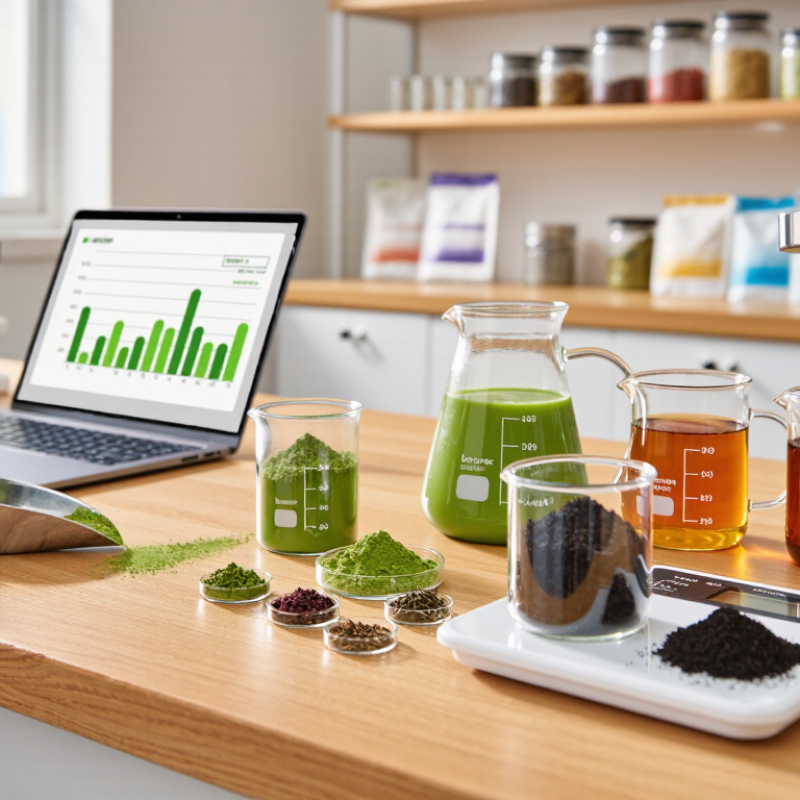
Choosing instant tea powder suppliers in 2026 starts with product evidence, not polished brochures. Request samples from more than one production lot. Brew each at the stated dosage and use water at a consistent temperature. Note the aroma, color, sediment, and how evenly the powder dissolves. Small differences matter. A sample may look excellent yet behave differently after several weeks in storage.
Review specifications for moisture, particle size, tea solids, and ingredients. Ask for a current certificate of analysis linked to the lot, along with relevant microbiological and contaminant test results. Check whether certifications such as ISO 22000, HACCP, or GMP are current, apply to the production site, and cover the right activities. A certificate helps, but cannot verify every batch. Ask for records. This detail is easy to miss.
Manufacturing standards also show in daily controls: calibrated scales, screened raw materials, documented cleaning, humidity management, and sealed, coded packaging. Request a process overview and, when practical, arrange a remote or on-site audit. Ask how staff investigate deviations and trace batches from tea input to finished powder. Listen for specific answers, not promises. Paperwork can be tidy while practice slips; compare documents with samples and production evidence before placing a large order.
Compare Supplier Capacity, Pricing, Lead Times, and Service
When comparing instant tea powder suppliers, verify usable capacity, not just advertised output. FAOSTAT data records global tea production above 6 million tonnes in 2022, but leaf volume does not guarantee powder-grade availability. Ask for monthly production capacity, current utilization, and recent batch records. Request samples from more than one production lot. Small gaps matter.
Compare like-for-like prices per kilogram. Check tea-solids content, moisture limits, packaging, minimum order quantity, sample charges, and freight. A low quote can hide costly rework or extra transport. Ask suppliers to separate production, testing, and shipping timelines. The World Bank’s 2023 Logistics Performance Index covers 139 economies and measures factors including logistics competence and timeliness. Use those benchmarks to assess shipping routes, but confirm actual lead times with recent shipment records.
Service quality shows up after the first order. Ask how quickly the supplier answers technical questions, shares traceability documents, and handles an out-of-specification batch. Set written response targets and agree on sample approval before production. A short pilot order can reveal whether color, solubility, and flavor stay consistent in your own beverage process. I would not rely on a polished sample alone; it may not represent routine production.
Verify Shortlisted Suppliers With Samples, Audits, and Reference Checks
A supplier’s product sheet cannot show how instant tea powder behaves in your own process. Request samples from a clearly identified production lot, not a specially prepared showcase batch. Brew each sample using the same water temperature, dosage, and mixing time. Record aroma, color, sweetness, dissolution speed, and any sediment after five minutes. Small differences matter. Keep sealed portions for comparison if later deliveries taste different.
During an audit, examine batch records, ingredient traceability, cleaning routines, and equipment calibration logs. Ask staff to trace one lot from incoming tea extract to finished package. Check whether the facility can explain how it handles out-of-spec results, rather than simply showing clean rooms. Review packaging seals and storage conditions, especially humidity control. A brief visit offers only a snapshot, though; production can vary between shifts.
Reference checks should focus on recent, comparable orders. Ask buyers about delivery consistency, taste variation, communication, and how the supplier handled a documented quality issue. Request permission to contact references directly, and compare their comments with sample results and audit findings. One caution: a positive reference may reflect a smaller order or a different product grade. Verify that the conditions match your expected volume and specification before approving a supplier.
FAQS
Specify tea type, flavor, color, caffeine preference, and intended drink. Set targets for serving dose, monthly volume, trial quantity, pack size, and lead time. Keep a reference sample. Preferences can change after testing.
Use the same powder dose, water temperature, and mixing time for every sample. Record aroma, color, sweetness, dissolution, and sediment after five minutes. Small differences matter. Keep sealed portions for later comparison.
Ask for a current specification sheet, lot-linked test results, ingredient origin, and shelf-life evidence. Review allergen handling, traceability, packaging details, and food-safety controls. Paperwork helps, but it cannot prove every batch.
Confirm that certificates are current and cover the actual production site and activities. Ask for supporting records. A certificate alone is not enough.
Check for calibrated scales, screened ingredients, documented cleaning, humidity control, and sealed, coded packages. Ask how staff investigate out-of-spec batches. Listen for specific steps, not broad promises.
Review batch records, cleaning routines, calibration logs, and ingredient traceability. Ask staff to trace one lot from incoming tea material to finished package. A short visit is only a snapshot.
Speak with buyers who placed recent, comparable orders. Ask about delivery consistency, taste variation, communication, and quality issues. A positive reference may reflect different order conditions.
A pilot can reveal differences between samples and regular production. Compare the delivered batch with your written targets and reference sample. Bench tests help, but they are not proof of consistency.
Conclusion
Finding top Instant Tea Powder suppliers in 2026 starts with defining your product requirements, including tea type, flavor, solubility, ingredient preferences, packaging, and expected order volumes. Set clear supplier criteria for quality, communication, production capacity, and delivery needs before searching. Use reliable industry directories, trade events, and professional networks to build a diverse list of potential suppliers, then narrow it down by reviewing their product specifications, certifications, quality controls, and manufacturing standards.
Compare shortlisted suppliers on production capacity, pricing, minimum order quantities, lead times, and customer service. Look beyond the quoted price to understand the full value offered, including consistency and support. Before making a commitment, request samples and assess them against your requirements. Where practical, arrange a facility audit or review independent audit results, and check references from existing customers. A careful, step-by-step evaluation helps you select a dependable supplier whose products and operations align with your goals.

Blog Tags: